

I met Sasha on a beach in Thailand in 2018. We in a town called Srithanu, on Koh Panghan, a kind of spiritual Mecca for westerners. By the time we met, I was getting tired of men who looked like Jesus talking earnestly about their diets and meditation regimes… so I moved up the road to a normal hotel with cocktails.
Here I met Sasha, who was a breath of fresh air. She was also from London but came to Thailand every year. She drove me around the island and took me to non-hippy spots, including a coffee shop tree house and a bar in the hills that played reggae.
When I started these interviews about the Many Ways to Live and Love*, Sasha got in touch to ask if her story was of interest. Hers is a story of resilience, adventure and finally learning to live life for yourself instead of everyone else. It’s a longer read than usual - please stick to the end. Her insights into marriage and what shapes women are hard won and brilliant.
I hope you like it as much as I did.
Thank you, Sasha.
Many Ways to Live and Love: Sasha Krstanovic
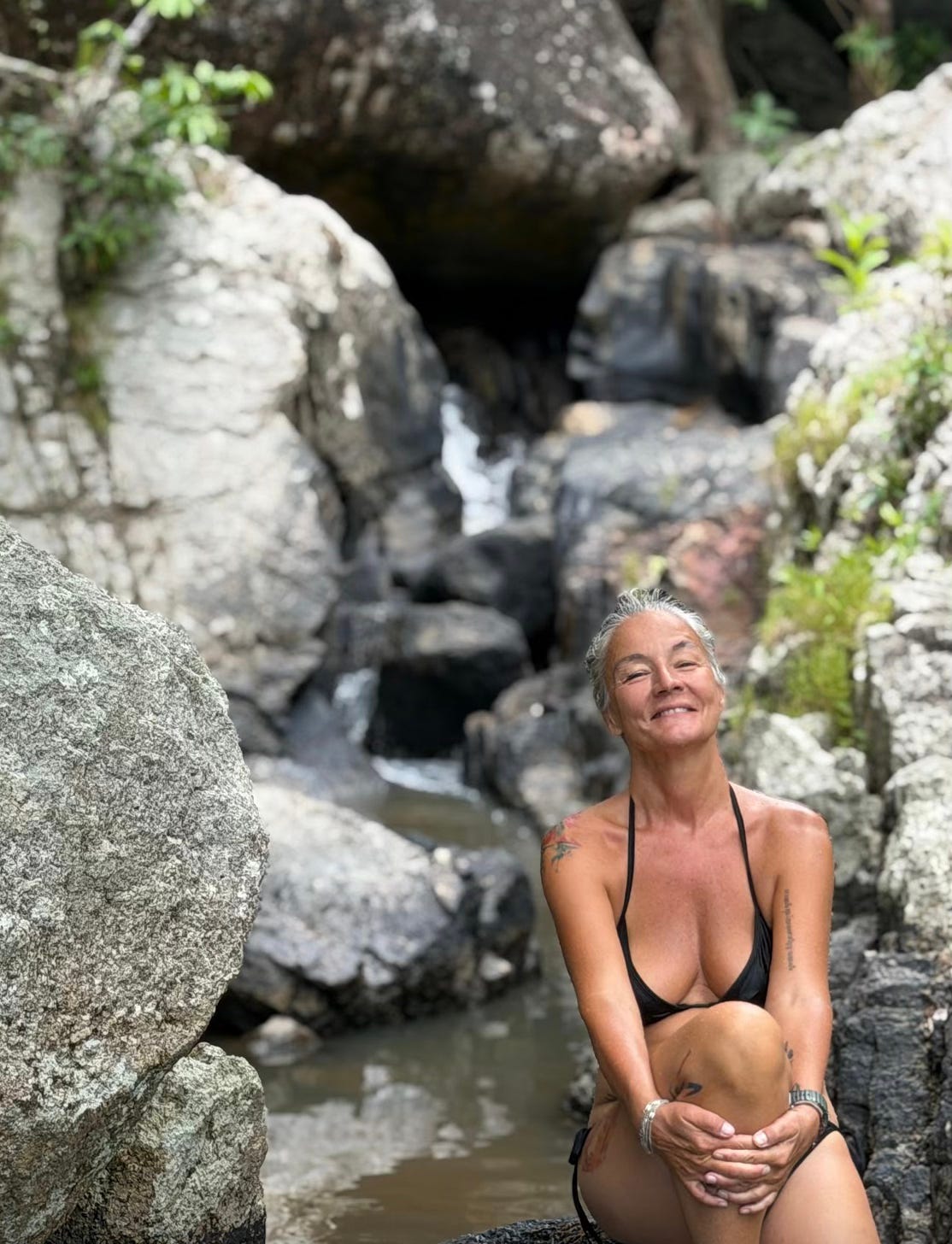
Tell me about your childhood
My parents lived in Canada while my mother was pregnant with me, then returned to Yugoslavia for my birth. I am an only child and not entirely planned. I once saw a letter my father sent my mother, effectively asking what she meant by “abortion.” My mother, by her own account, was not ready to be a mother.
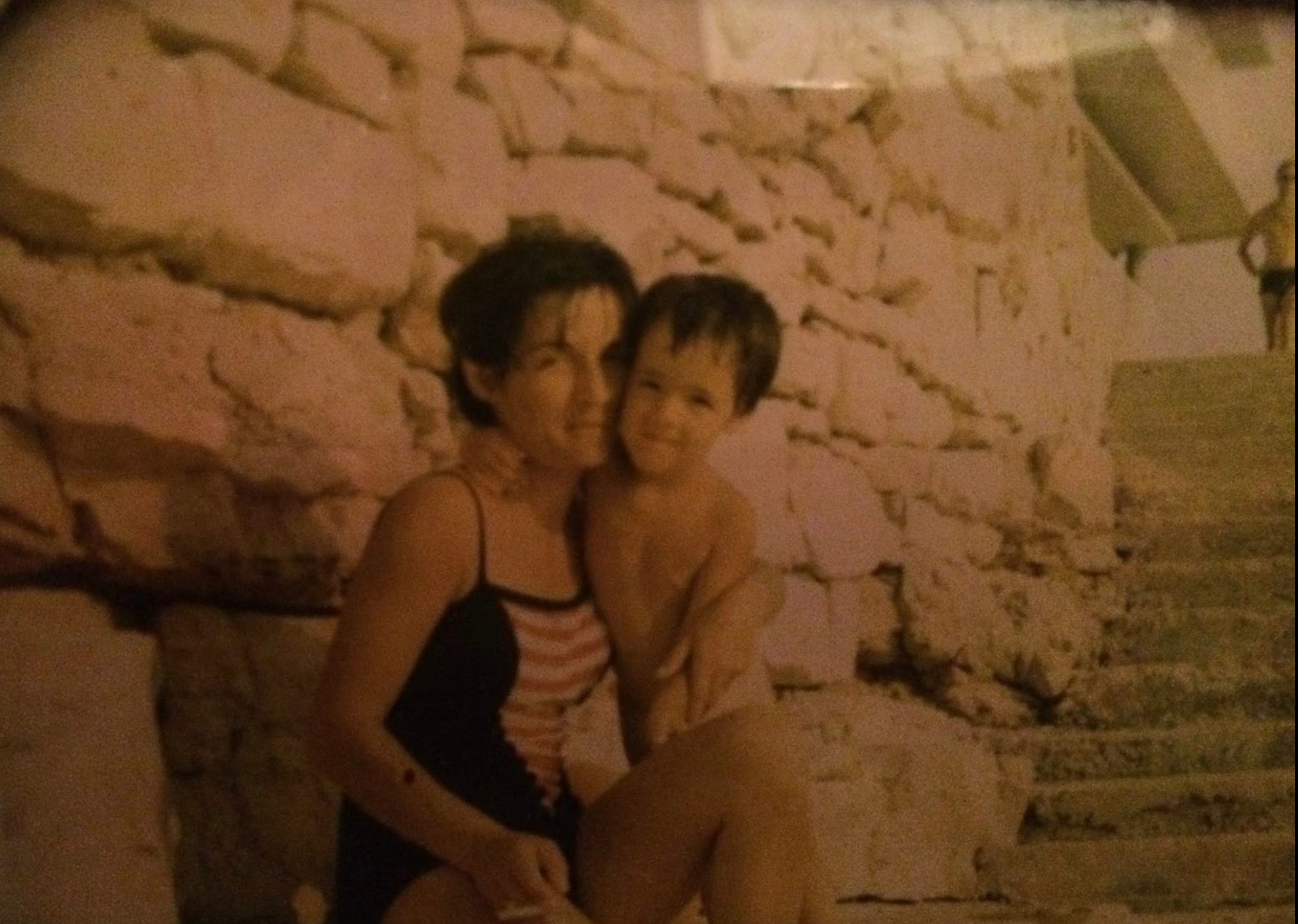
When you were young, what did you think your life would look like when you grew up?
I never really wanted marriage; it was never held up in my family as an achievement, and I credit my parents with that. I wanted a career like my father’s - he was an engineer.
We travelled a lot as a family - my father’s work posted him abroad - and I was curious, independent child.
From thirteen or fourteen I wanted to live in London - I would listen to Radio Luxembourg after midnight, since that was the only way to hear certain music, in particular heavy metal.
I had my first sexual experience at fifteen, with a twenty-three-year-old, on a family holiday. It felt romantic and fun at the time, though I view the age gap differently looking back. I was adventurous and sexual from a young age.
I was not dreaming of family, a unit, or true love as such - I was chasing desire rather than any picture of a settled future.
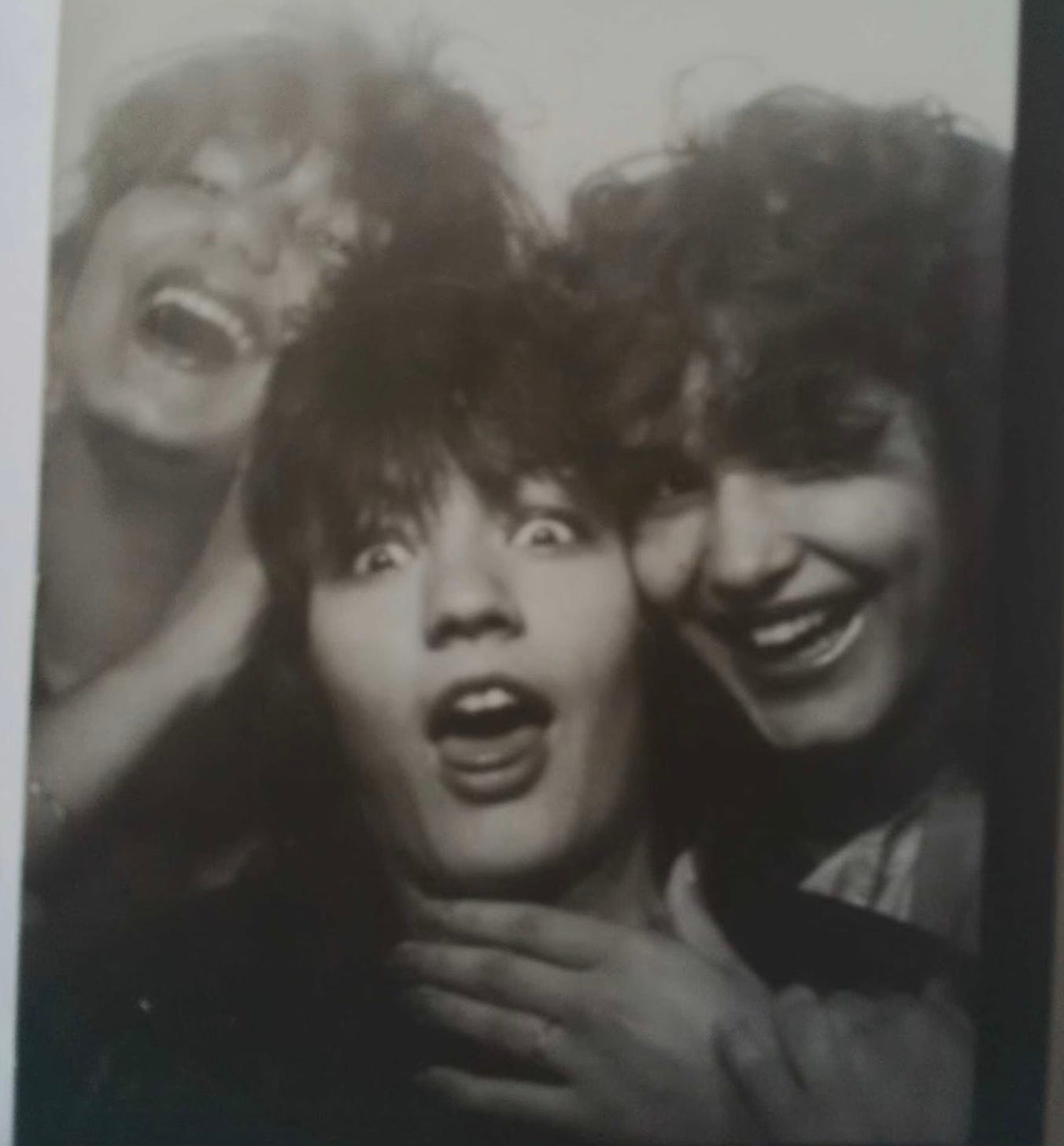
Please tell me how your early adulthood unfolded
When war broke out in Yugoslavia, I moved to London to finish my degree in mechanical engineering there. I brought my childhood love with me and we married so that he could get a visa. We got into clubbing.
We both went back to Belgrade to help start the city’s house music scene - we threw Serbia’s first proper house party, around 1994–95 - a hardcore period in more ways than one: my first husband became addicted to heroin, which I fought alongside him for about five years.
Just before our wedding in 1994, I became pregnant after removing an IUD. I was 27, and it was just days after graduating. I had a vivid sense of a prison door clanging shut, and had an abortion.
I regretted the decision for years.
We split shortly after. I started to work as an engineer in the UK and bought my first flat in London. I had a relationship with a colleague, whose marriage had also just ended. He had young children. Together we bought the flat above and remodelled both into a large three-bedroom home in Primrose Hill.
We split up when I started wanting children and he did not. It ended badly and I lost the job, the relationship, and nearly the house.
I picked myself up, chose celibacy for a couple of years, and really started building my career. I bought my ex out and was left with what was effectively two mortgages. I had lodgers for years afterwards, on an interest-only mortgage, to make it work.
Just as I cleared all my debts, I met my second husband on a holiday in Montenegro.
It was not a passionate love affair, rather we saw, I think now, a solution to our own unresolved things. After eight months he proposed saying he wanted a family. I was forty-three and wanted a child of my own too, so despite red flags from the start I said yes. I became pregnant just before the wedding and had a miscarriage.
A couple of years later we had stopped having sex, and he told me plainly that he had had his children and it was now his time to have fun. I chose to stay.
I became a step mum - his teenage son came to live with us when he was fifteen, and I learned everything about schools and raising a teenager from scratch; his daughter moved in as well in 2019.
What happened next?
In 2017 my husband fell for someone else - I found phone messages and emails. I booked couples counselling and a divorce lawyer. He said he wanted to stay and we had a few good years but in 2023 he wanted out of the marriage. He called me names and stopped speaking to me. There was another woman.
I asked him why he treated me the way he did. He said: “because I can.”
By then I had also been made redundant from the company I had worked for seventeen years. I likened the job to my marriage - I might have stayed shackled there forever had I not been given the push. As it was, I was glad. It let me go and live my life.
In 2024 we divorced. I started my own business and my two step children chose to stay living with me, both mid-way through their studies.
How do you live now?
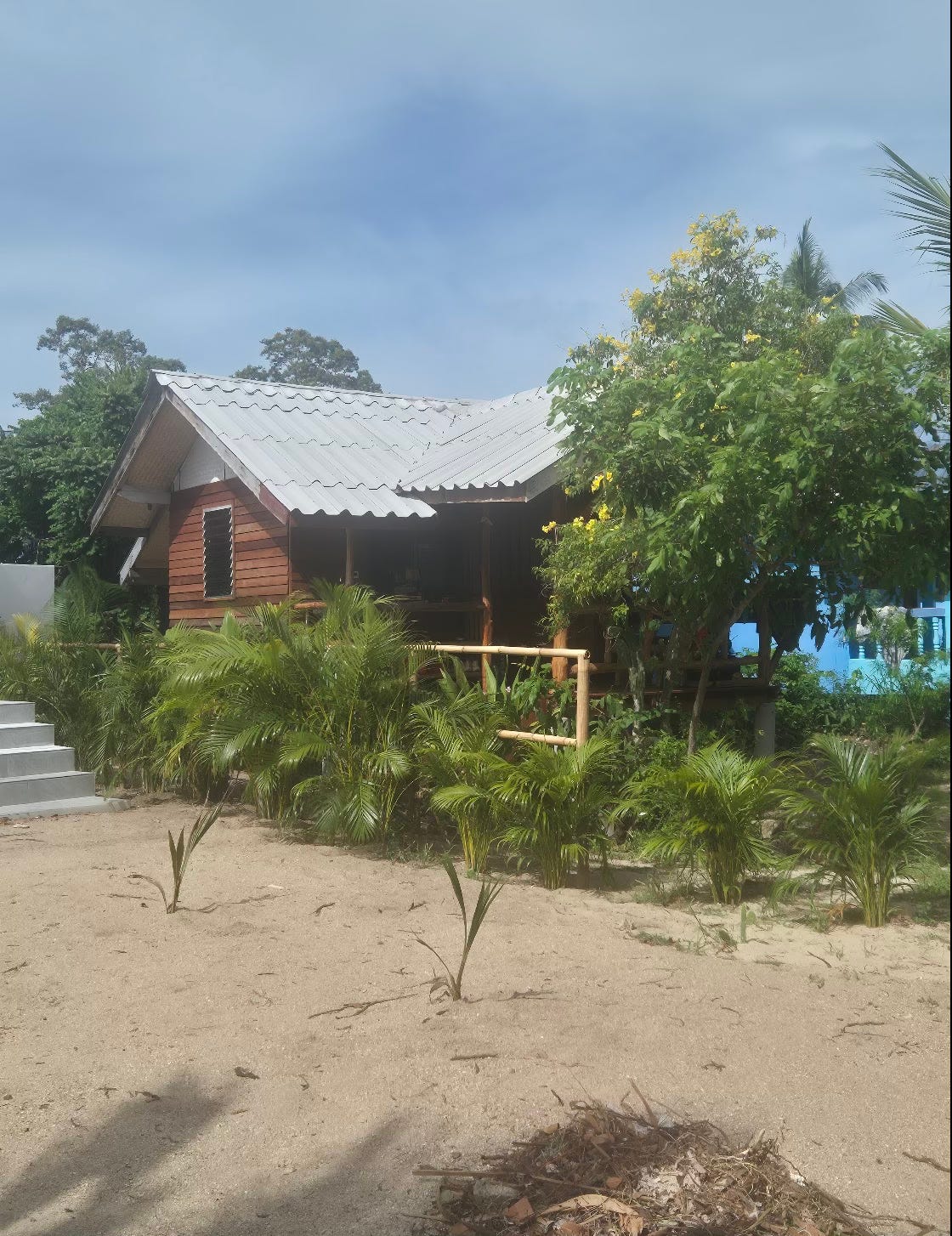
I now divide my time between London and Thailand.
I first went to Thailand at the turn of 2006 and I fell in love at first sight. I breathe differently here and have returned most years since.
I had always wanted to spend more time on Koh Phangan, or even live here, but knew that buying a proper house would cost several hundred thousand pounds, more than I could afford without selling up in London.
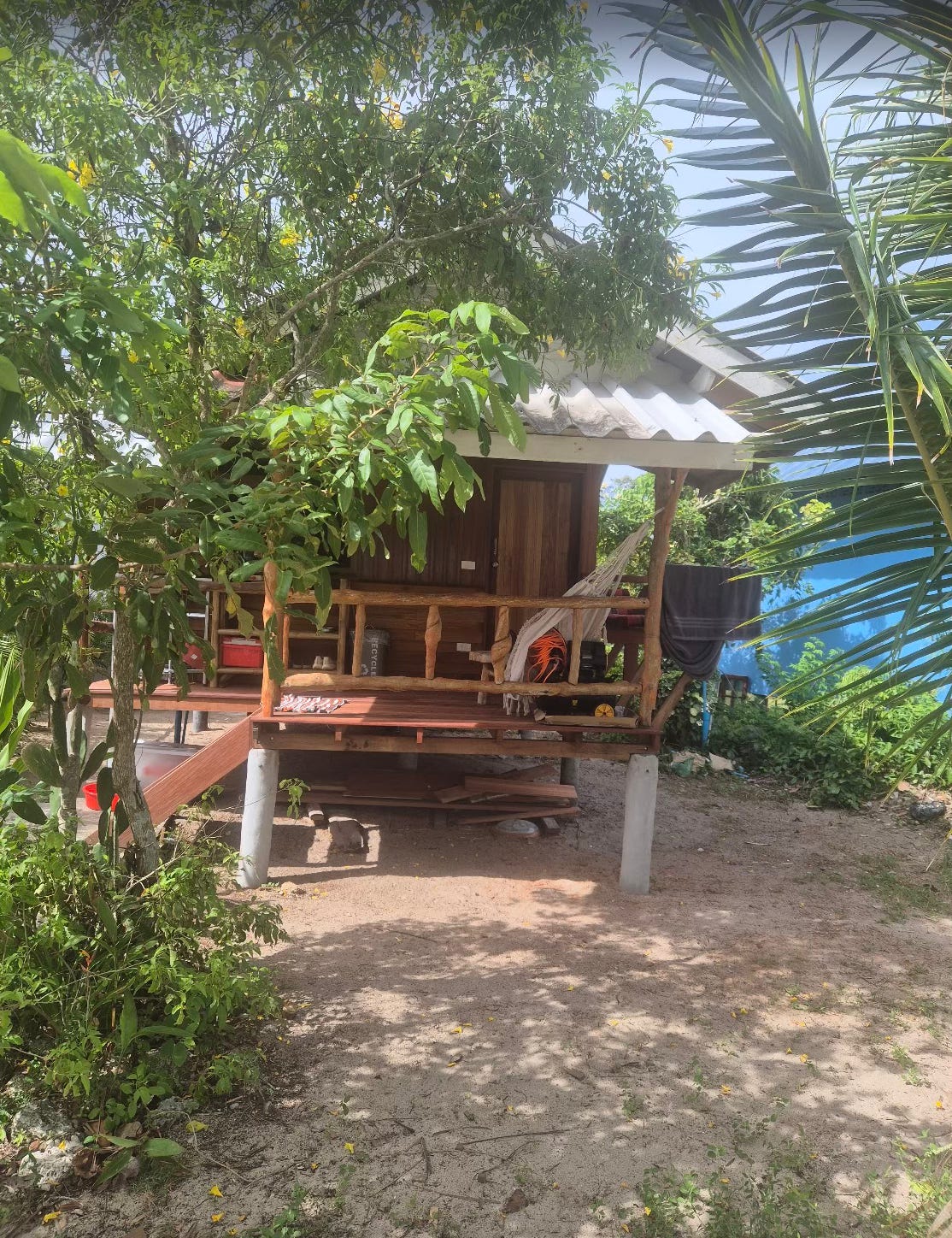
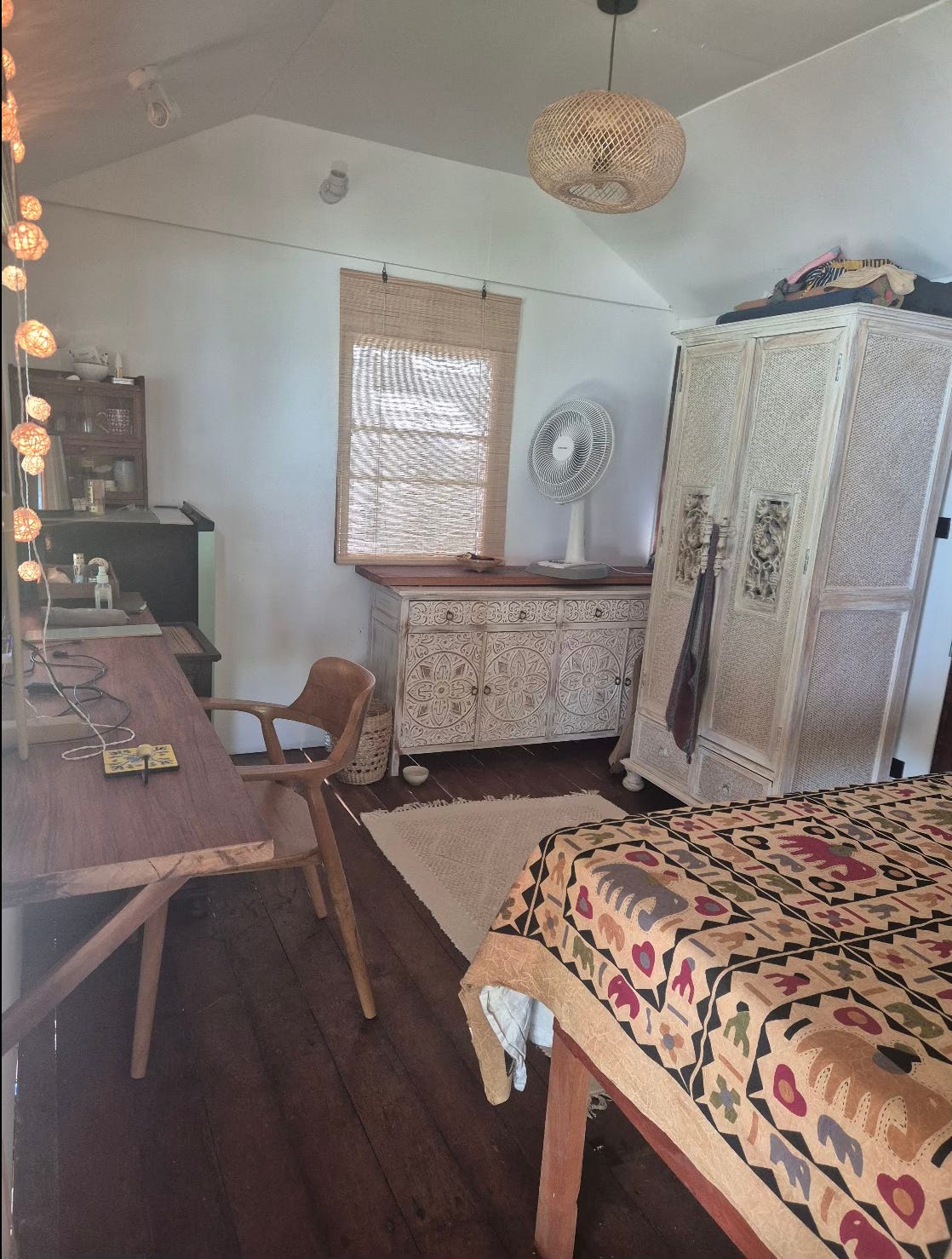
A friend on the island kept telling me there was a bungalow on the beach going, but I kept saying no. Then, in August last year, she told me to just go and look at it. I asked about the rent - five thousand baht, roughly £120 a month, long-term - and went to see it. When I saw the traditional Thai-style wooden bungalow with teak floors, right on the beach, it was love at first sight again.
It was also a complete wreck. It had been empty for thirty years but I paid six months’ rent immediately to secure it.
How is living in a beach hut?
The first couple of nights alone in the bungalow felt exposed. The beach is sparsely populated and even though I am adventurous by nature I felt unsure.
Robinson Crusoe was always one of my favourite books, alongside The Count of Monte Cristo. I loved stories of people surviving challenging, interesting situations through their own ingenuity. It took until fifty-nine to notice there was no Robinson Crusoe written for women. No story at all.
Men have had a whole library telling them that stepping outside the prescribed life is heroic — the castaway, the hermit, the sage who walks off into the hills.
Women were offered something rather different: the one who left the path was not brave, she was a witch, mad, or “letting herself go.” Scaremongering, not permission. Different women were always branded difficult - not adventurous, not someone to aspire to, learn from, or become.
At fifty-nine going on sixty, there’s no established path for a woman choosing to live part-time somewhere unconventional. That’s precisely why it feels worth doing.
I am not alone in it either: there are women on this island in their fifties, sixties and beyond, living exactly this kind of life.
What is life like there?
This twelve-square-metre bungalow, plus terrace, is the first space that is entirely mine, scaled to me exactly. Even the tiny bathroom, 1.2 metres by 80 centimetres, has a low shower that a friend says is too low. It isn’t. It’s exactly the right height for me.
My days on the island are filled with gentle morning beach runs or yoga, scooter rides for errands or to see friends, pottering around the bungalow or garden and then settling down to work from about four in the afternoon.
One of my main discoveries is the hammock! It is bliss – the ergonomics work for my menopausal back and I can stay for literal hours – reading, working, scrolling or just looking at the sea.
This beach hut also lets me do it while keeping my London life, which is important to me. I plan to be here 3-6 months of the year, in London the rest.
What are the best parts of your life now?
The best part, and the most unsettling part, is much the same thing: finally growing up, at fifty-nine, in the sense of no longer expecting anyone or anything else to fill the gaps, and instead working out what it is that I actually want - kitesurfing, writing, speaking online about what I care about, more work, or simply the ability to focus on the things that truly pull me, work among them.
How do you feel about not having your own biological children?
I always assumed I would have children but my choice of partners was never really conducive to it - it took me a long time to understand that you have to choose a partner to have children with, specifically, rather than for any other reason.
When I had a miscarriage at forty-three, with my second husband, I wanted a child in a way that was close to obsession. Then menopause finally took the choice away and, oddly, lifted a weight off me. I no longer carry the regret over the abortion that I once did. My stepchildren are my children in every way that matters.
I am also not sure I would have made a great birth parent - my own parents were rough with me, and I am not certain I would not have carried some of that into the next generation of my own. As a stepparent, that particular chain could not repeat itself in the same way.
How do you imagine friends and family see your life?
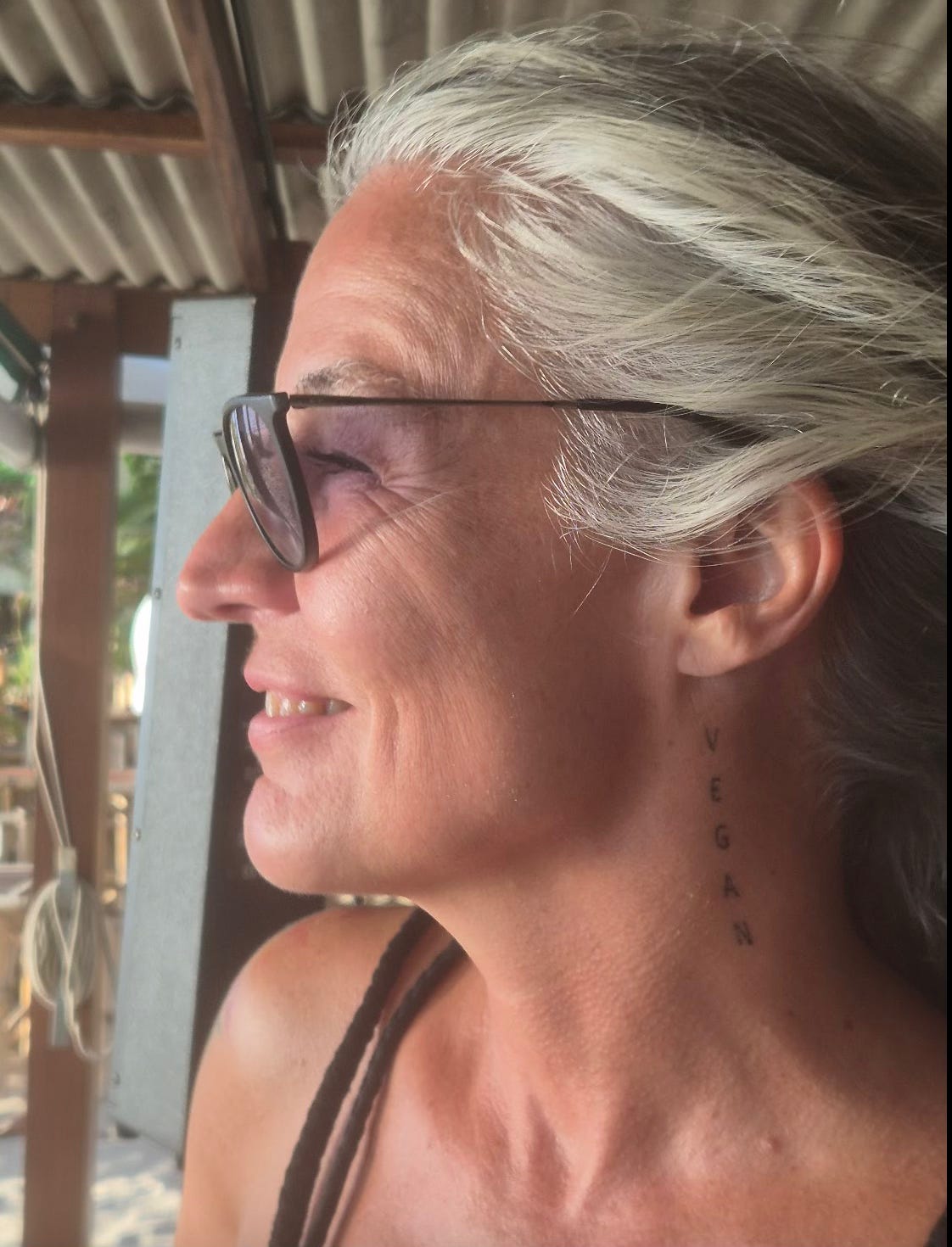
Close friends and family have always seen me as a free spirit, even before I was as free as I am now. A friend of mine calls me “radical” in my moves, whether that was veganism, heavy metal, growing out my greys at 43, marriages, step parenting, or now spending time in Thailand.
I have always been somewhat out of the norm, which I see as a good thing.
Although I am very heterosexual, had the language and the option existed forty years ago, I might well have described myself as “they,” since I never identified with the traditional role of women in society.
What do you think about the conventional ideas of what life should look like?
I have said for decades that “wife” is a job description - an employee that everybody needs. It is a patriarchal arrangement by nature: it works for a man, not for a woman.
I grew up wanting adventure but ended up, again and again, trying to be a good wife - my idea of one, at least, which turned out to be closer to a Stepford wife than to anything like me.
Even with all my own feminist, radical beliefs and behaviour, I still ended up carrying the lion’s share of both the physical and the administrative work of running a family, on top of caring for my disabled father.
I honestly do not know how I managed it all. That model of family depends on women doing back-breaking work underneath it, and it was never really viable — women are simply now refusing to keep doing it.
What advice would you give women in their forties, fifties, sixties and beyond who feel stuck?
I was stuck in a broken, unhappy marriage, for a decade and more. I had every tool and means available to me - financial power, no biological tie holding me to the children, who were largely grown by then, five years of psychotherapy behind me - and I still could not find the power to leave until it became unbearable.
We are hardwired to stay, and the stronger and more capable we are, often the more persistent we are at staying in situations that are bad for us, because we believe we can fix them.
So my advice is: get psychotherapy. What my own therapist did for me was help me start building boundaries I had never had before - and the more boundaries I set, the more my husband reacted against them, until the cracks that had been papered over became real and impossible to unsee.
And do yoga...any however gentle or intense version, it will help your body be a better host for your joy.
What advice would you have for young people starting their lives?
Do your best. Do not copy others - be the best version of yourself that you can be. Something I have taught my kids, especially my son: you are the one person you will have to live with for the rest of your life, so make sure you impress yourself, never mind anyone else. Be kind to others, and be kind to yourself. Leave the places you pass through better than you found them. Believe in yourself.
Many Ways to Live and Love is a weekly Q&A.
*We are living in a time when many of us are reimagining relationships and how we want to live. In the Many Ways to Live and Love, I want to share stories of people doing this, so that we can feel inspired and reassured that there are so many ways to dance through life.
If you want to check out our past interviews, read about Karen who gave away 90 per cent of her possessions to live on a house boat, Louise who moved in with a vicar after a bad break up and Mel who started a community of solo mums who now holiday together. You can also read about Emma Cox renovated a crumbling rat infested cottage on her own after her divorce and Monique Roffey’s certainty that she was never cut out for marriage. Last week we spoke to Shani Silver about being single for 18 years. If you have a story you’d like to share, please get in touch.
I’m 44 and I’ve been single for 18 years - the older I get, the less I need a man

A few years ago I was speaking to another single friend who made the comment that being single needed a PR campaign. At that point nobody believed me when I said I was happy to be single. ‘But you MUST want to meet someone,’ a friend said to me once, genuinely not understanding how I could be so ambivalent about the thing that she was determined to find…

Well of COURSE I love this. And not just because Sasha is such an impressive therapy advocate. What immense observations. Particularly around the gravitational field pulling all women into roles of duty and care, regardless of the freedoms they've tried to give themselves. So powerful.
I love everything about this story. Reading it makes me want to leave my marriage and rent a beach hut in Thailand too! I really appreciate Sasha talking about the ambivalent feelings post-abortion. I think it's so hard for women to speak about this. Sometimes to name regrets can feel like a disservice to the pro-choice movement, yet the reality is that our reproductive choices are so complex and multi-layered. And I fully concur that the combo of psychotherapy and yoga may just be the secret to life. Thank you so much for this rich and generous story, and for being a role model of post-menopausal womanhood that I can aspire to ❤